
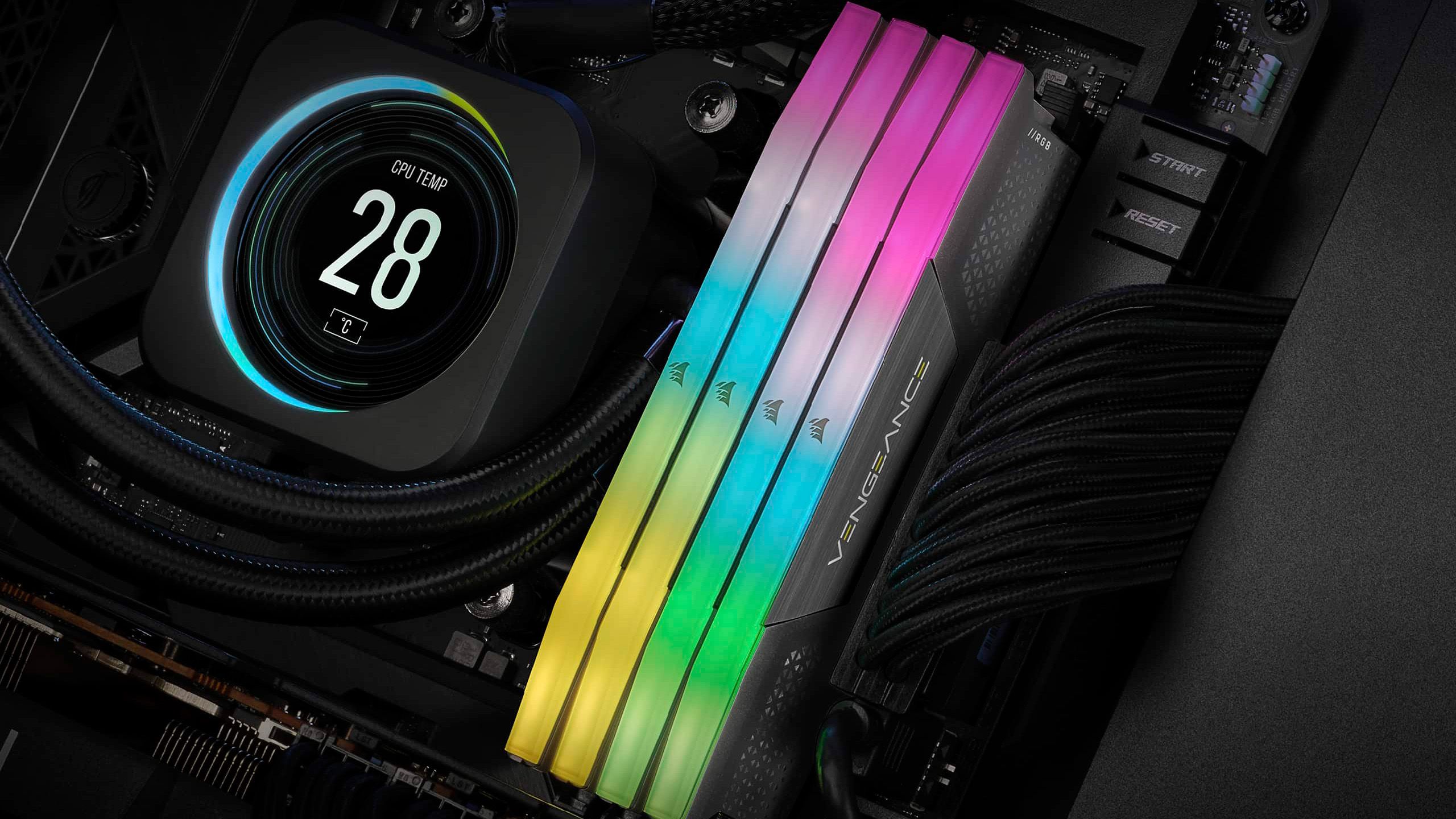
 uilding a balanced gaming rig just slammed into a brick wall. DDR5 clocked at 6,000 MT/s has long served as the undisputed performance-to-price sweet spot for modern platforms, but daily pricing spot checks tracked by Tom's Hardware confirm that a baseline 32GB (2x16GB) kit has officially breached the $400 threshold. That represents an increase of more than 400% from its historical lows, completely torpedoing the core math of mid-range DIY builds.
According to tracking data from PCPartPicker cited by Tom's Hardware, a 32GB Corsair DDR5-6000 kit that briefly bottomed out around $80 on Newegg now commands that full $400 ransom. Higher-tier capacities face an even more grotesque markup: workstation-grade memory kits have surged by up to 500%, catapulting 128GB DDR5 configurations straight to $3,399 at retail.
Enterprise Squeeze on Consumer Silicon
The culprit behind this price gouge is zero-sum fab reallocation. Massive enterprise AI infrastructure rollouts are devouring global wafer capacity, directly cannibalizing mainstream consumer DRAM production to churn out high-margin server chips and high-bandwidth memory (HBM).
AI buildouts are consuming much of the world's NAND and flash manufacturing capacity, which is having a knock-on effect for consumer production.
Memory manufacturers have made their priorities abundantly clear: everyday PC builders take a backseat to enterprise balance sheets. As Tom's Hardware pointed out, Micron went so far as to wind down operations for its consumer-facing Crucial brand to focus entirely on high-margin enterprise accounts. With raw silicon diverted upstream at the fabrication level, consumer retail pricing will likely deteriorate further throughout the coming quarters.
Surviving the RAM Crunch
Trying to cut corners by stepping down to bottom-tier DDR5 speeds offers zero meaningful financial relief. Slower kits like Corsair Vengeance DDR5-4800 still hover around $359, asking you to trade away noticeable memory bandwidth just to claw back a pathetic $40 savings. Hobbling your system's memory controller for a 10% discount on a single component is a sucker's deal.
If you are planning an upgrade today, paying retail scalper rates for standalone DDR5-6000 is financial malpractice. Your realistic options are clear: stretch your current DDR4 rig a bit longer, grab a console for pure gaming throughput, or pivot to system integrators. Bulk pre-builts and retailer component bundles remain the last operational shelter against runaway standalone DRAM inflation.